If your St. Louis home is more than 15 years old, you’ve probably wondered whether those shingles are still doing their job. The short answer: most asphalt shingle roofs in the St. Louis metro last 18 to 25 years, but our climate — with its summer hailstorms, freeze-thaw cycles, and 90°F+ heat — often pushes roofs toward the lower end of that range. As a St. Louis roof replacement contractor who inspects hundreds of roofs per year, here are the warning signs we see most often.
Catching these signs early matters. A small issue like cracked flashing might cost as little as $200 to repair, while ignoring it for two years can turn it into $8,000+ in water damage and a full replacement. Below are the 8 clearest signs it’s time to call a roofer.
Not sure whether these signs add up to a real problem? A professional inspection will tell you for certain – see our guide to roof inspection cost in St. Louis and what a thorough inspection covers.
1. Your Roof Is Over 20 Years Old
Age alone doesn’t mean your roof needs replacing, but it’s the single best predictor. Standard 3-tab asphalt shingles typically last 15 to 20 years in Missouri. Architectural (dimensional) shingles last 25 to 30 years under ideal conditions. In St. Louis, where hail, UV exposure, and temperature swings are constant, subtract 3 to 5 years from manufacturer estimates.
If you don’t know your roof’s age, check your home inspection report from when you purchased the property, or look for a permit record through St. Louis County’s online portal. Meridian offers free roof inspections that include an age and condition assessment.
2. Shingles Are Curling, Buckling, or Missing
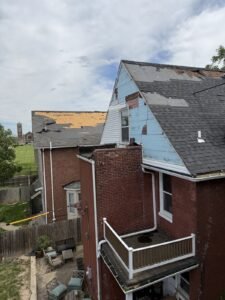
Walk your yard and look up. If you see shingles that are curling at the edges, buckling in the middle, or missing entirely, your roof’s weatherproofing is compromised. Curling happens when the asphalt dries out from UV exposure — common on south-facing and west-facing slopes in St. Louis that get the most afternoon sun.
A few missing shingles after a storm can often be repaired. But if you’re seeing widespread curling or buckling across multiple sections, that’s systemic aging — not isolated damage — and replacement is usually the better investment than patching.
3. Granules in Your Gutters
Those dark, sand-like particles accumulating in your gutters are shingle granules. Granules protect the asphalt layer from UV damage. Some granule loss is normal on new roofs during the first year or two. But if you’re finding heavy granule buildup in established gutters — especially after rainstorms — your shingles are deteriorating.
Here’s a quick test: after the next rain, check the bottom of your downspouts. If you see a pile of dark granules, take a photo and schedule a roof inspection. Granule loss accelerates once it starts, and bare asphalt can crack within a single St. Louis summer.
4. Daylight Visible Through the Roof Boards
Go into your attic on a sunny day and turn off the lights. If you can see pinpoints of daylight coming through the roof deck, water is getting in too. This is often accompanied by dark stains or streaks on the underside of the decking, which indicate ongoing moisture intrusion.
This sign is particularly common in older St. Louis homes — many built before 1980 have original plywood decking that’s been through 40+ years of temperature cycling. When the deck itself is compromised, shingle replacement alone won’t solve the problem.
5. Sagging Roof Deck
A roof should follow straight, clean lines. If you notice a dip, sag, or wave in the roofline — whether from the ground or from inside the attic — that’s a structural issue requiring immediate attention. Sagging typically means the decking or support structure has been weakened by prolonged moisture exposure.
In St. Louis, we see sagging most often in homes that had undetected ice dam issues. Water backs up under shingles during winter freeze-thaw cycles, slowly rotting the decking over years. By the time it’s visible as a sag, the underlying damage is usually extensive.
6. Higher Energy Bills
Your roof is a major part of your home’s thermal envelope. When it’s failing, your attic temperature becomes harder to regulate, and your HVAC system works overtime. If your energy bills have crept up 15 to 20% over the past few years without a clear explanation, poor roof ventilation or deteriorating shingles could be the cause.
A properly functioning roof with adequate ventilation keeps your attic within 10 to 15°F of the outside temperature in summer. When shingles degrade and ventilation fails, attic temperatures in St. Louis can exceed 150°F, radiating heat into your living space.
7. Storm Damage: Hail Hits and Wind Damage
St. Louis averages 3 to 5 significant hailstorms per year. Even if your roof looks fine from the ground after a storm, hail can crack shingles, dent flashing, and dislodge granules in ways that only show up during a close inspection. Storm damage often triggers insurance claims that cover full replacement.
After any hailstorm producing 1-inch or larger hail: schedule a professional inspection within 30 days. Missouri insurance policies typically require timely reporting of damage. Waiting too long can jeopardize your claim. Meridian handles the full insurance claims process for storm damage — from documentation to adjuster coordination. See our step-by-step storm damage insurance claim guide for what to expect.
8. Moss, Algae, or Dark Streaks
Dark streaks running down your roof are usually Gloeocapsa magma — a type of algae that feeds on the limestone filler in shingles. It’s cosmetic at first, but over time it holds moisture against the shingle surface, accelerating deterioration. Moss is worse — its root system physically lifts shingles and creates entry points for water.
North-facing slopes in shaded St. Louis neighborhoods (think Kirkwood, Webster Groves, Ladue) are most susceptible. While cleaning can help in early stages, heavy moss growth usually means the shingles underneath are already compromised.
What to Do If You See These Signs
If you’ve identified one or two of these warning signs, a professional inspection will tell you whether you need a repair or a full replacement. Here’s a general guideline:
| Situation | Likely Action | Estimated Cost |
|---|---|---|
| Missing shingles (isolated area) | Repair | $200–$500 |
| Minor flashing damage | Repair | $300–$800 |
| Widespread curling/buckling | Replacement | $8,000–$15,000 |
| Sagging deck + water damage | Replacement + decking | $12,000–$22,000 |
| Storm damage (insurance claim) | Full replacement | Often covered by insurance |
For detailed pricing on a full replacement, see our 2026 roof replacement cost guide.
Get a Free Roof Inspection
Meridian Roofing & Renovation offers free, no-obligation roof inspections across the St. Louis metro area. We’ll assess your roof’s current condition, document any damage with photos, and give you an honest recommendation — repair or replace — with transparent pricing.
Call us at 314-952-4158 or request your free inspection online.
Signs You Need a New Roof — FAQs
How do I know if my roof damage is covered by insurance?
In Missouri, homeowner’s insurance typically covers roof damage caused by sudden events like hailstorms, wind, and fallen trees. It does not cover damage from normal wear and tear or neglect. After a storm, document the damage with photos and contact your insurance company within 30 days. Meridian helps St. Louis homeowners navigate the entire claims process.
Can I just repair my roof instead of replacing it?
If damage is limited to a small area — a few missing shingles, minor flashing issues — repair is usually the right call. But if your roof is over 20 years old and you’re seeing multiple warning signs (curling, granule loss, leaks), patching won’t address the underlying deterioration. A full replacement is the better long-term investment.
How long does a roof replacement take in St. Louis?
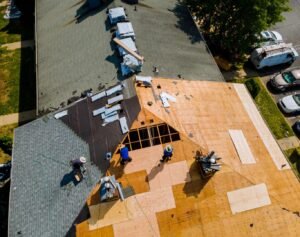
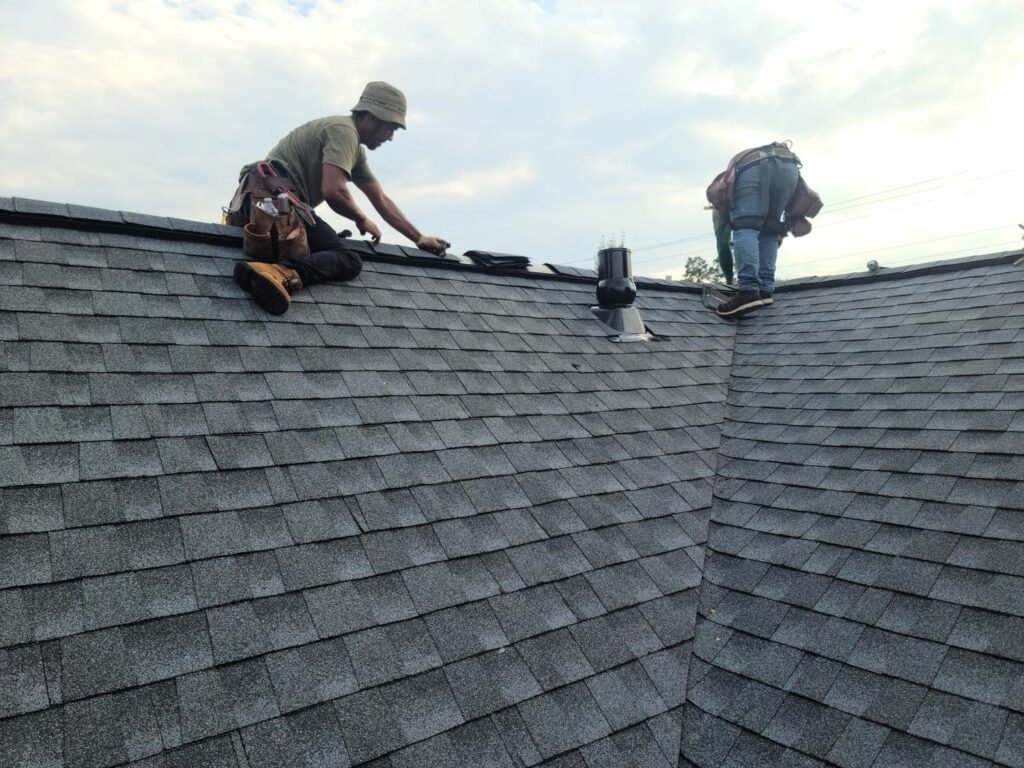
Most residential roof replacements in St. Louis take 1 to 3 days, depending on the size of the home and complexity of the roof. Weather delays can extend this during spring storm season. Meridian typically completes a standard 1,800-square-foot home in a single day.
What time of year is best to replace a roof in St. Louis?
Late spring (May–June) and early fall (September–October) are the ideal windows. Summer heat above 95°F can affect shingle adhesion, and winter cold makes materials brittle. However, emergency replacements after storm damage can be done year-round.
How much does a roof inspection cost?
Meridian offers free roof inspections throughout the St. Louis metro area. Some companies charge $100–$300 for inspections, but we believe homeowners deserve honest information without a fee attached. Our inspections include a written condition report with photos.
Related: Not sure if your roof was actually hit? Start with our homeowner’s guide to identifying hail damage on a roof — including the chalk test adjusters use to confirm damage.