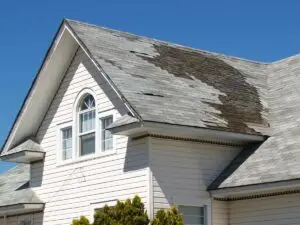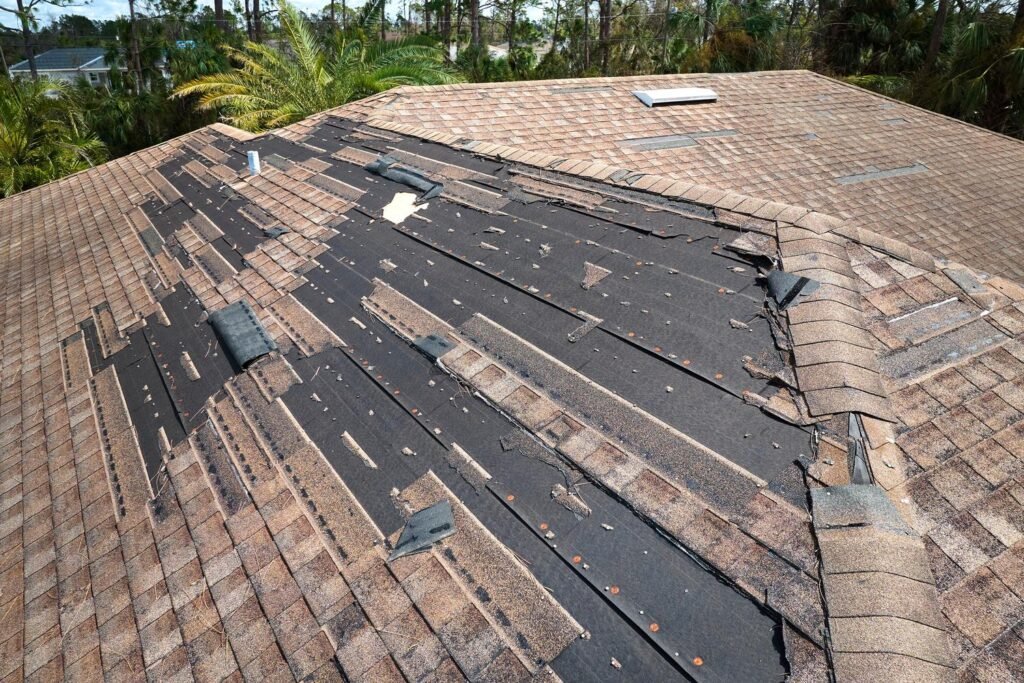
After a hailstorm rolls through St. Louis, your first call is usually to your insurance company. But what you do in the first 48 hours after storm damage can make or break your roof insurance claim. Missouri homeowners typically have up to two years to file a claim, but waiting even 30 days to document damage can give your insurer grounds to dispute it. Here’s exactly how the process works — from the first phone call through final payment — based on hundreds of storm damage claims we’ve handled across the St. Louis metro.
As a storm damage roofing contractor who works with insurance adjusters weekly, Meridian walks you through every step of this process at no cost. We don’t get paid until your roof gets replaced.
Step 1: Document the Damage Immediately
Before you call anyone, grab your phone and start documenting. Insurance companies rely heavily on photographic evidence, and the sooner you capture it, the stronger your claim.
What to photograph:
- Wide shots of your entire roof from multiple angles (ground level is fine)
- Close-ups of any visible damage — dented gutters, cracked shingles, dented flashing
- Damage to other areas — siding dings, broken window screens, dented AC units, damaged deck furniture
- Your gutters and downspouts (hail often dents aluminum gutters visibly)
- Any interior damage — water stains on ceilings, wet insulation in the attic
If your gutters were damaged in the storm, our gutter replacement cost guide for St. Louis breaks down 2026 pricing by material and what to expect.
Also document: the date and time of the storm, your address, and save any severe weather alerts you received. The National Weather Service archives hail reports by date and location — your contractor can pull this data to support your claim.
Step 2: Call Your Insurance Company
Contact your homeowner’s insurance provider within 48 hours of the storm. When you call, you’re simply reporting potential damage — you’re not committing to anything. Tell them:
- The date of the storm
- That you have visible damage to your roof and/or exterior
- That you’d like to file a claim and schedule an adjuster inspection
Important Missouri detail: While Missouri law gives you up to two years to file, many insurance policies have shorter reporting windows — some as short as 60 days. Don’t test the limit. File promptly.
Your insurance company will assign a claim number and schedule an adjuster visit, usually within 1 to 2 weeks.
Step 3: Get a Professional Roof Inspection (Before the Adjuster Comes)
This step is critical and often overlooked. Have a qualified roofing contractor inspect your roof before the insurance adjuster arrives. Your contractor’s job is to identify all damage — including damage that’s not visible from the ground — and document it with professional-grade photos and measurements.
Meridian provides free storm damage inspections that include a detailed written report. This report becomes your evidence if the adjuster’s assessment comes in low.
Why this matters: insurance adjusters inspect dozens of roofs per week and spend an average of 30 to 45 minutes per property. A qualified roofing contractor who specializes in storm damage will often identify damage the adjuster misses — particularly on steeper-pitch roofs, around penetrations (vents, chimneys), and on the backside of ridgelines.
Step 4: Meet the Adjuster on Your Roof
When the insurance adjuster arrives, your roofing contractor should be there too. This is standard practice and your right as a homeowner. Having your contractor present ensures:
- All damage is pointed out during the inspection (adjusters work fast)
- Measurements and damage counts are accurate
- Nothing is missed that could reduce your payout
- Any disagreements about damage are addressed on the spot
At Meridian, we attend every adjuster meeting at no charge. We’ve found that claims where the contractor is present at the adjuster inspection result in significantly more accurate payouts than claims handled without contractor involvement.
Step 5: Review the Insurance Scope and Estimate
After the inspection, your insurance company will send a “scope of loss” document — essentially a line-by-line estimate of what they’ll pay for. This is where many homeowners lose money. Common issues to watch for:
- Incomplete damage assessment — adjuster missed a slope, didn’t count all damaged shingles
- Depreciation holdback — if you have Replacement Cost Value (RCV) coverage, your insurer pays the depreciated amount first and releases the rest after repairs are completed. Make sure you understand this two-payment structure.
- Missing line items — ice and water shield, drip edge, ridge vent, or starter strip may be omitted
- Code upgrade exclusions — if your municipality requires upgraded materials or methods, those costs should be covered
Your roofing contractor should review this scope against their own inspection findings. If there’s a gap, a supplement can be filed. Supplements are routine — they’re not adversarial. They simply address items the adjuster missed.
Understanding ACV vs. RCV Coverage in Missouri
This distinction determines how much money you actually receive:
| Coverage Type | What It Means | What You Receive |
|---|---|---|
| Replacement Cost Value (RCV) | Covers full replacement cost of a new roof | Full cost minus deductible (paid in two checks) |
| Actual Cash Value (ACV) | Covers depreciated value of your roof | Depreciated value minus deductible (one check) |
Most St. Louis homeowners have RCV policies, which is the better coverage. With RCV, you’ll receive two payments: the first check (ACV amount minus deductible) after the claim is approved, and the second check (the depreciation holdback) after repairs are completed and documented.
Missouri-Specific Insurance Rules You Should Know
Statute of Limitations
Missouri gives homeowners up to two years from the date of loss to file a property insurance claim. However, your individual policy may have stricter requirements. Always check your policy language.
Percentage-Based Deductibles
Many Missouri wind and hail deductibles are now percentage-based — typically 1% to 2% of your home’s insured value rather than a flat dollar amount. On a home insured for $300,000, a 2% wind/hail deductible means $6,000 out of pocket. Check your declarations page to know your deductible before a storm hits.
Contractor Licensing
Missouri does not require a state roofing license, which means storm chasers often flood the St. Louis market after major hail events. Always verify your contractor has local business registration, adequate insurance, and manufacturer certifications.
The Full Timeline: From Storm to New Roof
| Step | Timeline |
|---|---|
| Storm occurs → document damage | Day 1 |
| File insurance claim | Days 1–2 |
| Professional roof inspection | Days 2–5 |
| Insurance adjuster visit | Days 7–14 |
| Receive scope of loss / estimate | Days 14–21 |
| Supplement filed (if needed) | Days 21–28 |
| Approve scope → schedule replacement | Days 28–35 |
| Roof replacement completed | Days 35–42 (1 day install) |
| Final payment (depreciation release) | Days 42–56 |
Total process: 3 to 8 weeks from storm to completed roof, depending on insurance company speed, storm severity, and seasonal demand.
Get Help With Your Storm Damage Claim
Meridian Roofing & Renovation handles the full insurance claims process for St. Louis homeowners — from the initial inspection through adjuster meetings, supplement negotiations, and final completion documentation. We work with all major insurance carriers and charge nothing for the claims assistance.
If your home was recently hit by hail or wind, call us at 314-952-4158 or schedule your free storm damage inspection. We respond within 24 hours. For a full breakdown of roof replacement costs in St. Louis, see our pricing guide.
Storm Damage Roof Insurance FAQs
Will my insurance rates go up if I file a roof claim?
Filing a single weather-related claim typically does not increase your premiums in Missouri, as hail and wind damage are considered “acts of God” rather than negligence. However, multiple claims within a short period may affect your rates. Every carrier handles this differently.
What if my insurance claim is denied?
If your claim is denied, you have the right to dispute the decision. Start by requesting a re-inspection with your contractor present. If the dispute isn’t resolved, you can file a complaint with the Missouri Department of Commerce and Insurance or hire a public adjuster for an independent assessment.
Should I get multiple roofing estimates for my insurance claim?
Your insurance company pays based on their own scope of loss, not on contractor estimates. However, having a detailed contractor estimate helps identify items the adjuster may have missed. One thorough estimate from a qualified storm damage contractor is more valuable than three generic quotes.
How do I know if I have hail damage on my roof?
Hail damage often isn’t visible from the ground. Signs include dented gutters or downspouts, cracked or bruised shingles, missing granules, and damage to soft metals like flashing and vents. For a comprehensive checklist, see our guide on signs you need a new roof.
Is it illegal for a roofer to pay my deductible in Missouri?
Yes. In Missouri, it is illegal for a contractor to waive, absorb, or pay your insurance deductible. This is considered insurance fraud. Any contractor who offers to “cover your deductible” is breaking the law and should be avoided.